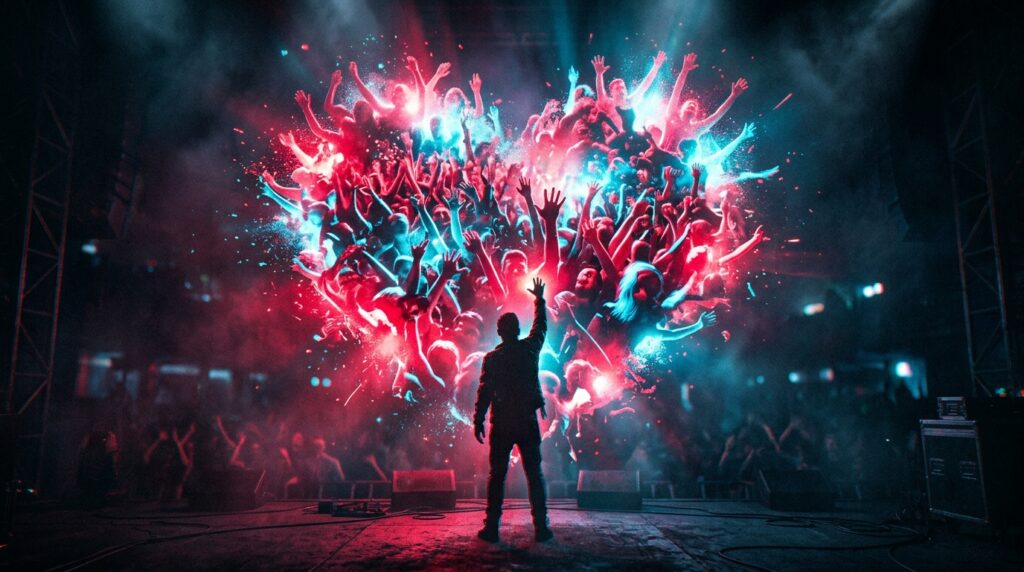
Most brands talk about their product. Features, benefits, arguments. That’s not wrong, but it’s boring. Entertainment marketing from music and entertainment works the other way around, because nobody buys a song for its technical specs. You buy a feeling, an identity, a moment. And that’s exactly the lesson classic brands urgently need.
Attention is cheap, loyalty is expensive
You can buy reach. A view costs a few cents, a viral moment can be engineered. But attention alone is worthless if nothing sticks. Entertainment lives on people coming back. An artist builds a relationship with an audience over years, not a single post.
Good entertainment marketing doesn’t sell a product. It sells a feeling people want to identify with.
Three principles from entertainment marketing
What the industry has been getting right for decades, and what carries over:
- Character before message. People follow personalities, not logos. A brand needs a recognizable attitude, not an interchangeable tone of voice.
- Consistency over campaigns. An artist doesn’t vanish after a four-week flight. Strong presence comes from duration, not from isolated bursts.
- Fans instead of target groups. A target group consumes. A fan defends you, shares you and forgives your mistakes. That’s a completely different level of loyalty.
How to apply this to brands
You don’t need to be a record label to think this way. Three concrete steps:
- Define an attitude that’s allowed to polarize. Try to please everyone and you stay invisible.
- Build recurring formats instead of one-off campaigns. People love series because they create anticipation.
- Treat your most loyal customers like a community, not a conversion. They are your best channel.
This exact thinking sits behind projects like the work for Nuclear Blast Records or RHYTE, where attitude and recognizability reach beyond the single campaign.
Bottom line
Classic marketing often optimizes the next click. Entertainment marketing builds something people return to voluntarily. The difference sounds small, but it decides whether you rent attention or own a real connection. And connection has never been as valuable as it is today, when everyone is fighting for the same three seconds of attention.
Like this?