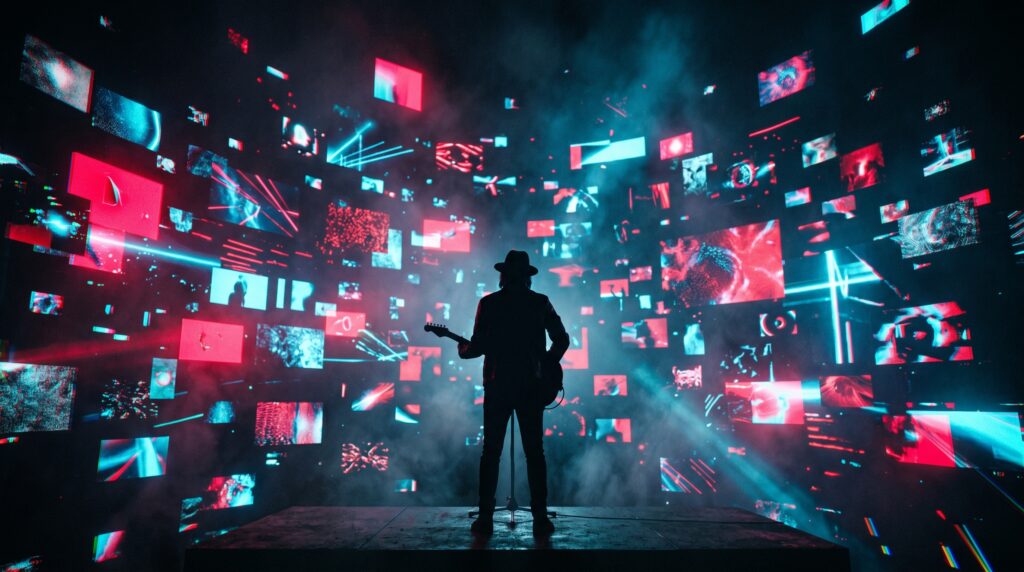
Creative direction for musicians is often considered too late. First there’s the song, then maybe a cover, then a music video, then a few social posts. In the end everything looks somewhat okay, but nothing feels like one coherent world. That’s exactly the difference between a single good asset and a visual universe that makes an artist stronger over the long run.
A music video is not a branding system
A strong music video can create attention. But a music video alone rarely carries a whole campaign. People encounter a release in many places today: in the feed, on Spotify, on YouTube, in stories, in ads, on tour posters, in press shots and in short clips. When every touchpoint looks different, recognition evaporates.
A single video can create a moment. Creative direction turns it into a world people can return to.
What a visual universe has to deliver
A good visual universe isn’t just a moodboard. It’s a system of decisions. That includes look, colors, typography, visual language, motion, edit feel and tone. The point isn’t that everything looks the same. The point is that everything comes from the same attitude.
- Recognizability: fans should recognize the artist before the name appears.
- Flexibility: the look has to work for music video, social content, artwork and the live context.
- Emotion: the imagery has to amplify the feeling of the song, not just decorate it.
- Consistency: every release should expand the world, not start from zero again.
Why artist branding works differently than brand branding
For classic brands it’s often about clarity, trust and differentiation. For artists, something else comes in: identification. Fans don’t just want to understand what an artist stands for. They want to find themselves in that world. That’s why creative direction for musicians is allowed to be more emotional, edgier and riskier than classic corporate design.
In entertainment marketing especially, it isn’t only about information, it’s about belonging. That’s also the core of the article Good entertainment marketing doesn’t sell a product, it sells a feeling: people don’t just follow content. They follow an attitude.
How to develop a visual world
My approach doesn’t start with the prettiest image, but with the inner core of the project:
- What emotion should the release trigger?
- Which contrasts make the artist interesting?
- Which visual codes fit the music without turning into cliché?
- Which assets does the campaign actually need?
- How can the look be told across several weeks?
The work for Nuclear Blast Records shows exactly this: music marketing works harder when campaign, visuals and fan expectation are thought through together. Then you don’t just get content, you get a sense of world.
Bottom line
Creative direction for musicians isn’t a luxury at the end of production. It’s the frame that turns songs, videos, artworks and social content into a recognizable identity. A single music video can create attention. A visual universe builds loyalty. And loyalty is far more valuable in music marketing than a short peak in the feed.
Like this?