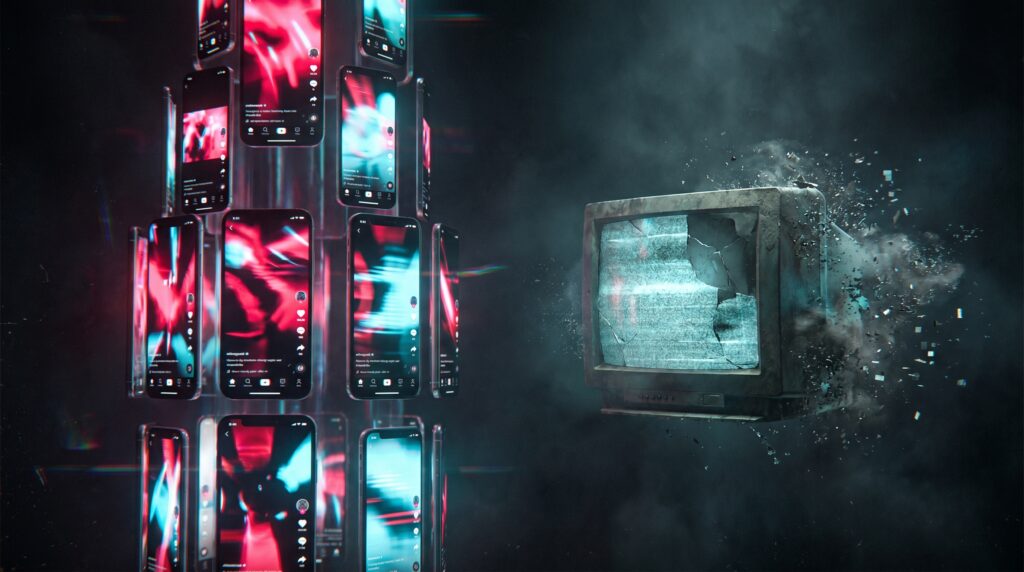
Plenty of brands say “social-first” and mean: we cut the TV spot into 9:16, slap on subtitles and hope TikTok handles the rest. That isn’t social-first marketing. That’s leftovers in a different aspect ratio. Genuinely strong social-first campaigns aren’t born at the end of production, they’re born at the very start of the idea.
Social-first doesn’t start with the format
The problem is rarely the platform. The problem is the mindset. A classic spot often builds slowly: setting, product, benefit, claim. On social media that build is usually over before it began. The hook has to be clear immediately, but it can’t feel cheap. Good social-first campaigns manage to create tension in the first seconds and still carry a recognizable brand world.
9:16 is not a concept. A vertical video only becomes social-first once the idea, rhythm and repetition were built for the platform.
What social-first campaigns do differently
A campaign for TikTok, Reels or Shorts needs different building blocks than a classic hero film. Three things matter most:
- A hook that stands out in the feed. Not louder, clearer. People have to understand instantly why they shouldn’t keep scrolling.
- Multiple variants instead of one masterpiece. Social media rewards testing. Different openings, cuts and captions aren’t a bonus, they’re part of the workflow.
- A recognizable system. Colors, typography, tone, motion and edit logic should work like a small world, not like isolated lucky hits.
Why a single hero film isn’t enough
The classic campaign mistake: all the budget flows into one big asset. Then someone tries to quickly cut content for six platforms out of it. That almost always feels like a compromise. Social-first flips the logic. The campaign is planned as a content system: hero idea, short-form variants, stills, teasers, behind-the-scenes, community reactions and paid-social adaptations all come from one shared creative line.
That’s exactly why projects like RHYTE are interesting: when look, attitude and content mechanics are thought through together, recognizability emerges. And recognizability is more valuable on social media than a single perfect clip.
My approach to social-first marketing
I don’t start with the question of which format will be needed in the end. I start with the question of which behavior the campaign should trigger: stop, save, share, comment, click or come back. Only after that do the hook, the visual language and the production plan take shape.
- Define a clear creative platform.
- Test hooks and content formats before production.
- Produce assets modularly, not linearly.
- Plan editing, copy and sound for social media from the start.
- Learn after launch and push follow-up variants.
Bottom line
Social-first campaigns aren’t smaller than classic campaigns. They’re just built differently. Treat social media as a post-production afterthought and you lose speed, relevance and often the best idea. Design from the start for the feed, the community and repetition, and you build campaigns that don’t just get seen, they stick.
Like this?